
Economic survey shows decline in optimism
Optimism among Yorkshire’s businesses has declined since the start of the year, new research from West & North Yorkshire Chamber of Commerce shows.
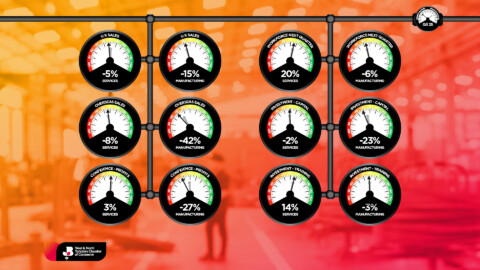
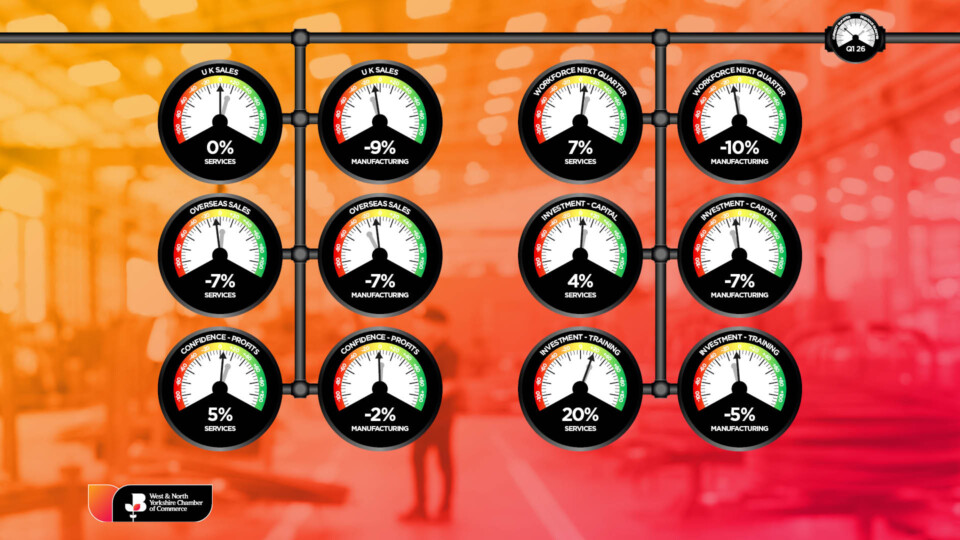
Data published in the Chamber’s first Quarterly Economic Survey of 2026 shows that employers in the region reporting weaker sales performances, declining willingness to invest and anticipating lower levels of profitability.
And, with the bulk of the fieldwork for the QES having been carried out before the emergence of the conflict in the Middle East, expectations around any further uptick in the region’s economy will likely be further weakened by widely anticipated disruption to the cost of both energy and shipping.
And, while taxation and wage bills remain the chief cost pressure on businesses, the new data shows that concerns around inflation were rising even ahead of impact on energy supplies around the gulf, hinting at a wider decline in business leaders anticipating reduced overheads in the months ahead.
Mark Casci, head of policy and research at the Chamber, said: “The fact that business sentiment was tracking downwards even prior to the conflict in the Middle East does not auger well for the state of Yorkshire’s economy during the months ahead.
“Investment plans, hiring intent and expectations around improved profitability were all down in the first quarter of the year, ahead of the first military strikes unfolding in the Middle East.
“What we may be seeing are the foothills to a broader decline in economic activity domestically, something borne out by the recent downgrade of UK GDP forecast by the Organisation of Economic Co-operation and Development (OECD).
“We continue to urge the Government to keep all options on the table to make life easier for businesses and look to ways in which the sky-high cost pressures facing employers can be eased.”
The latest QES for West and North Yorkshire was not all doom and gloom however.
Manufacturers reported a second consecutive quarter of growth in overseas sales while there was a marginal uptick in companies looking to invest in training their staff.
However, hiring intent remains poor with both sectors showing an increasing unwillingness to take on new staff. For the service sector, the number of firms looking to increase their headcount is at lows not seen since the height of the pandemic.
Willingness to invest in capital projects and machinery has declined as employers battle sky-high overheads and both sectors saw a decline in projections around their profitability.
Mr Casci continued: “It is a very expensive time to be running a business of any size and this is being manifested in the findings of this report.”
David Bharier, Head of Research at the British Chambers of Commerce said: “Even before the latest escalation in the Middle East, business sentiment remained fragile and stuck in a low-growth phase.
“Most SMEs continue to report no improvement in key indicators such as investment and cash flow. Sentiment remains largely unchanged since the 2024 Budget, which saw a permanent increase in the labour cost base for firms.
“Businesses face a fresh wave of employer costs and burdens from this month, causing further pressure and uncertainty.
“But the Iran conflict is now the major factor that could derail fragile progress. We are already seeing early impacts, with firms reporting rising energy and shipping costs, echoing the initial stages of previous global shocks.
“De-escalation is the only way to prevent a deeper economic crisis. As energy costs rise the government should keep all options on the table to help businesses. Bringing forward and extending the scope of the BICS (British Industrial Competitiveness Scheme) would be a strong step, alongside reconsidering how renewable levies on business energy bills are paid.
“In the longer term, breaking out of this low-momentum cycle will require delivering the industrial strategy, boosting and diversifying our exports and the broader adoption of AI to drive productivity.”