

Construction Skills Roundtable
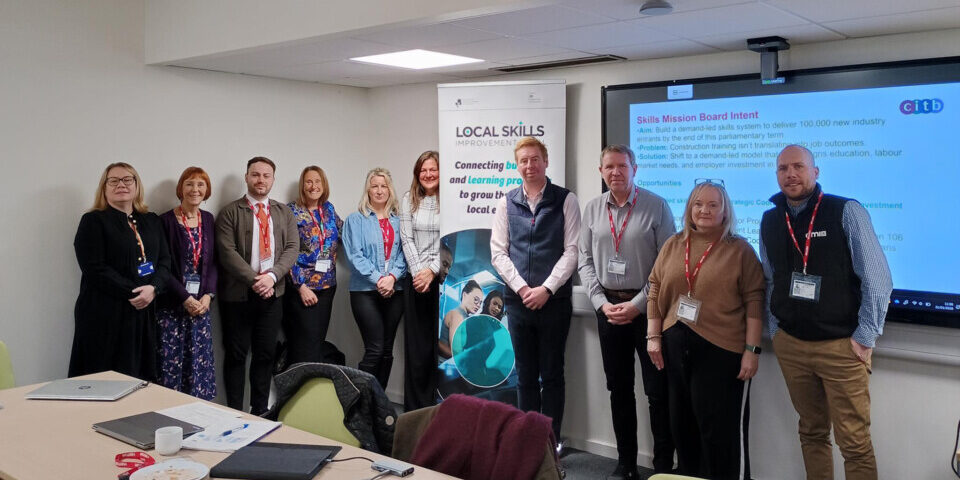
Construction Skills roundtable, held at Leeds College of Building on 21st January 2026
Construction Skills was the key topic of discussion at a roundtable event held at Leeds College of Building and organised by West & North Yorkshire Chamber of Commerce.
Attendees included Leeds College of Building, Construction Industry Training Board (CITB), Federation of Master Builders, the chamber, West Yorkshire Combined Authority and employers: Torsion Group, Morgan Sindall Property Services, Bowmer and Kirkland, Cairn Cross Civil Engineering and GRK Civils. Who came together to discuss the construction skills needs for West Yorkshire both now and in coming years, and how Private Sector, public sector and education providers can best collaborate to address these.
This, along with other skills roundtables are an integral part of hearing the employer and stakeholder voices on skills priorities as part of activity for the Local Skills Improvement Plan. Construction skills was a key part of the last plan and remains high on the agenda as plans are put together for the next 3 years.
CITB state more than 26,000 new employees are needed into the sector in the next 3 years in Yorkshire and Humber alone.
Nikki Davis, CEO of Leeds College of Building, a member of the Government’s Construction Skills Mission Board and a board member of CITB talked about how construction skills are essential to enable the rest of the regional growth plans, including defence, prisons and more. The college has recently been appointed a Construction Technical Excellence College (CTEC) for Yorkshire and Humber, working on the Constructions Skills agenda across 5 Strategic Authorities, 16 Colleges and 20 Independent Training Providers.
The College is keen to increase its own skills provision. After having a waiting list of 1,000 students last year they have recently invested around £3 million to expand their North Street campus with a facility that will allow them to train 2,000 additional students each year. However significant additional funds are needed to transform their new building into useable teaching space.
The CTECs are prioritizing the training of skilled workers in high-demand trades such as bricklaying, carpentry, roofing, and electrical work. Higher level skills such as site managers and quantity surveys are in high demand too. The colleges aim to train 40,000 people by 2029 and will receive a share of £100 million in government funding to tackle construction skills shortages. The CTECs will operate on a ‘hub and spoke’ model, partnering with local training providers and employers to expand courses and improve training standards. They will provide training routes into entry-level jobs, retraining, and upskilling options for existing workers.
The Construction Skills Mission Board aims to identify large projects and future builds to ensure that the skills are in place to deliver these. It has a national reach.
The work of others, such as CITB, Combined Authorities and the Local Skills Improvement Plan also help to translate these into the picture of local needs for the sector. It is proposed that key stakeholders will work together in the coming months to ensure an effective Construction Skills Plan for West Yorkshire, mapping career progression routes, building on existing good practice within the district, and that can then feed into future planning for education providers, including college accountability statements by spring 2027. It is recognised that engaging employers, enhancing quality and putting in place additional training provision takes time and investment, however there is huge opportunity for future development.
The group discussed how to best address barriers to workforce development, such as simplifying engagement for employers, particularly the very small businesses. Also recognised that recent changes affecting employment costs may impact the industry and recruitment intent.
Young people that are not in employment potentially face £1million loss of earnings over their lifetime and so ensuring good employment opportunities, affordable to employers and beneficial to employees is not just good for learners but also benefits society.
CITB highlighted the wide range of opportunities available in the sector, where demand for skills remains high and is likely to be resistant to the workforce changes that AI may bring in other sectors. With site manager salaries at around £70,000 per annum, and the majority of other roles earning £40,000 +, perhaps there is more to be done in making young people and their parents aware of the opportunities that the sector can offer.